American poverty is neither urban nor rural – it’s small, mostly white towns

A vacant, boarded up house is seen in the once thriving Brush Park neighborhood with the downtown Detroit skyline behind it in Detroit,

It has been a year since Trump entered the White House, and eighteen months since the Brexit vote. Yet the media still display an astonishing lack of understanding about several aspects both of US wage stagnation, as well as how it interacted with voting.

The Brookings Institute came out with an important piece recently which has not received the attention it deserved. They produced five maps, showing the winners and losers in median wage change across the US between 1999 and 2016. Some of the results are obvious: the first map, of “winners”, shows that wages in the tech hubs and in government subsidised DC have done rather well; the last map, showing where wages have done the worst – step forward Detroit amongst others – is also a well-worn narrative.

But it is the penultimate map which should be most concerning. I have long argued that American liberals take far too narrow a view of poverty, and see the role of government as essentially providing urban answers to urban problems, which are the most visually obvious to those inside the Beltway. This ends up focusing on helping ethnic and other minorities, albeit usually in a less-than-constructive method. Altogether ignored is where much of the real poverty lies – as this map shows:

metro_20171012_alan-berube_fig4-struggling-v3

It repays some close study. The problem areas are not Detroit or Flint or Cleveland. The problems are that 10 urban areas of over 1 million inhabitants – and another 59 towns of between 100,000 and 1 million – have experienced median wage declines of 10% – 15% over the period. On the basis of this study, that’s 50 million people constituting the single largest group, and are not all names you would expect:

While the group contains a handful of large Sunbelt metro areas still laboring to rebound from the late 2000s housing crash (e.g., Miami, Orlando, Phoenix, Tucson) and a few major industrial centers in the Midwest (e.g., Chicago, Indianapolis, Milwaukee), small- to mid-sized urban areas predominate in this category. Most are manufacturing centers that lost significant numbers of middle-income jobs in the 2000s that have not been replaced, including 10 urban areas in Wisconsin, six each in Michigan and Ohio, and five each in Georgia and Indiana. A few have shown some green shoots in the 2010s after a rough decade, including Ann Arbor and Kalamazoo in Michigan, and Oshkosh in Wisconsin. Others, however, have slipped considerably since 2009, such as Charleston, W.Va., Davenport, Iowa, and Springfield, Ill.

This reinforces two lessons. The first is that the often quoted cliché about urban vs rural voters is a false one; neither America (nor Britain) are about large urban centres. By my last count, well fewer than half (43%) of Americans lived in conurbations of over a million people. Fewer again (33%) lived in cities of over two million. The genuinely rural population is also small (15%). Instead, real American life is about small market and post-industrial towns.

Politics focused on what happens in New York or LA, and contrasted perniciously against what happens “out on the ranch”, is not helpful to anyone. Reporters and politicians know all about the urban indigent, even if they do not do much about it; but they seem to know nothing of the small-town working poor. That is what Trump and Sanders were all about. It is also the case with Britain, as was identified in an excellent piece in 2007 by Blair Freebairn.

The obsession with reporting on urban areas is one I have discussed before in relation to media misinformation about street protests in the developing world.

Neatly compact urban street protests are highly photogenic and easily captured on camera. Crowds sell news … It is difficult for outside observers to empathize with anyone other than those who are so passionately occupying the capital. It also involves much greater effort and investment in time – time which is not afforded by the twenty-four hour news cycle.

The great tragedy is that the same misguided focus is applicable at home, where we discovered last year that journalists who should know better, did not.

The second lesson is the danger of economists and economic commentators continue to fall victim to the intellectual Tyranny of the Mean, whereby average numbers still form the focus at the expense of median data. What I should hope is by now a very commonly seen chart shows the disparity which still leads to the incredulous question: “who are all these poor white people?”

US_GDP_per_capita_vs_median_household_income

There is little sense in technocrats informing voters that their economy has been growing, or that living standards have been rising, when no-one recognizes it as such. The disparity shown here is not only obvious as a chart, but more importantly in how voters feel about the economy. Median calculations are not perfect, but a good starting point would be for all economists to rethink along median lines each and every time they put out a statistic or indicator.

All said and done, it seems to me most liberals have still not grasped the underlying lessons of the last few years. Obama, of course, had precisely zero to say on the issues that would come to dominate 2016 – he barely seemed curious about such trends, for someone so supposedly intellectual. Fighting the urban-rural battle is to continue the last war. Small white towns are where it’s at right now, and telling them they’ve been doing okay is not going to win any votes.

The Handover Hangover – Britain and Hong Kong in the age of the New Normal

HK handover

The British media, between the endless coverage of the debacle that is Brexit, the May government and the spectre of Jeremy Corbyn, recently managed to find a little time for soul-searching over Hong Kong, on the twentieth anniversary of the 1997 handover. The hand-wringing tone over whether Britain had let the people of Hong Kong led the Guardian for instance to note that:

“Theresa May’s government faces a choice between upholding legal principle and democratic values, and its chronic post-Brexit need for Chinese trade and business at any price. No prizes, or yellow umbrellas, for predicting which way May and Johnson will jump.”

The torturous link to contemporary politics aside, these op-eds convey a tone of unfulfilled potential. Chris Patten weighed in with his own personal laments over what has slowly occurred since , self-flagellating over Chinese encroachment of the former colony.

Yet much of this seems rooted in misconceptions that still seem to pervade the British establishment. For a start, the very act of suggesting that Britain should “do something” about still hints, however much denied, that she is in a position to do so. This is unrealistic not only because of the relative imbalance but also the distance and relevance of the two countries, notwithstanding the occasional bravura peeks through, wishfully claiming that “China needs Britain more than Britain needs China“. This mismatch is true politically, culturally, socially and above all, economically.

In cold economic terms, it is not only the the imbalance that demonstrates relative strength – China incurred a US$37.6bn trade surplus in 2016 for instance – but also mutual insignificance. According to data, Britain is only China’s 9th largest trading partner, accounting for just 2.7% of Chinese exports, far from enough to move the psychological needle. Compare this with Germany, for whom the UK constitutes 7.1% of exports, or even the US at 3.8%. Britain and China are simply not that relevant to each other. China matters slightly more to the UK than vice versa, accounting for 4.4% of her exports (and arguably Chinese consumption of British goods such as high end cars is less easily replicable than in the other direction), but it is still not much of a basis for negotiations or threats.

Moreover, there appears to be a parochial misunderstanding about Hong Kong’s destiny as “just another Chinese city”. Critics will say that social and political life are not the same as economic life; to that I would say one necessarily follows the other. Consider a recent piece in the Financial Times about how the Hong Kong has changed since 1997. Two visuals stand out:

Hong Kong is increasingly no longer a regional hub but more of a China port. Yet this is not just a function of being on China’s doorstep, or even of China’s desire to integrate Hong Kong as some might imagine; it is rather a consequence of the fact that the old colonial entrepot model of corporate imperialism in Asia is gone. China is a self-sustaining economy of critical mass. The days of being able to “do” China from offshore, are as absurd as believing one can cover the US from London or Toronto. This is beginning to apply to other countries too, particularly Indonesia but also Thailand and increasingly, Malaysia. The concept of largely expat financiers and traders sitting in the comfort of the Victoria harbourfront whilst servicing these jurisdictions is faintly ridiculous; and this is a global emerging markets trend.

Asia has changed. The era when its leadership still had links with their former colonial rulers, such as the Cambridge-educated Lee Kwan Yew to Britain, is over. A telling moment was the closing in 2009 of the much-loved Far Eastern Economic Review, a deeply socio-political publication inhabiting a world where Asian leaders and western discourse still understood each other. Today, nothing could be further from the truth – as countries like China pass the “peak export” phase of their development cycle, their economies and leadership are inevitably more introspective. Each country must be engaged from a truly domestic perspective and cities like Hong Kong, and to an extent Singapore, are less relevant. There is nothing Britain can or should do about this.

At least Hong Kong, despite its comparative decline, still has a future bound up with a single large power. Singapore will soon come to find that its position as a safe haven for Indonesian and Malaysian investment and private wealth is under a more serious threat – which has led to their driving ambition behind ASEAN. London, in the end, will probably feel these winds of change too.


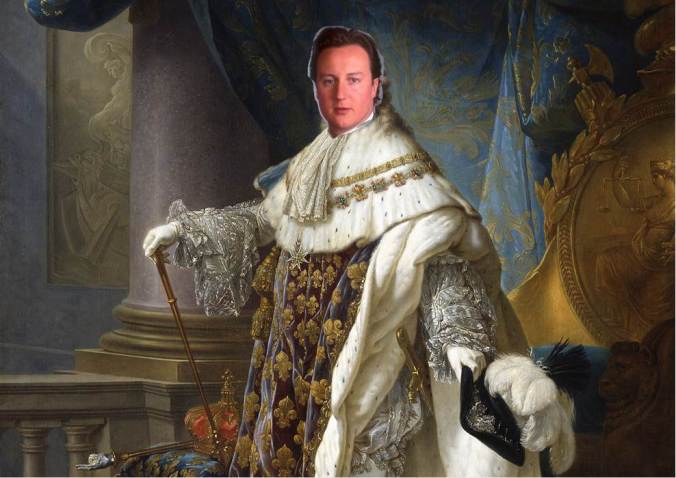
Après moi, le déluge – the political genius of David Cameron in retrospect

Cameron photo.bmp

I do not intend my first piece since the election to join the superabundance of post-mortems offered up from May’s failure (more of that later). Instead I want to take a moment to think, in retrospect, about the spectacular but underappreciated political genius of her predecessor.

David Cameron’s election victory in 2015 remains the most extraordinary and understated political achievements in my active political life, and almost my entire memory (I will categorise 1992 as mere childhood). Even his most diehard critics will, I am sure, now concede how much happier they were then than now, because David Cameron actually took the message of Conservatism to the country and won.

Consider that this is a man who campaigned for austerity in 2010; failed to win a majority; and then persisted with a message of austerity again five years later to finally win an outright majority. Can we think of anyone in the current government who would be so unrelentingly on message, and who at the same time could win over the suburban liberal vote, however thin a sliver?

Coming from Twickenham, I unapologetically use it as a benchmark: seats like this, or Kingston or Richmond Park, are critical and they are the very future of the party. I got this year’s election result wrong. But I always maintained, even at the height of May-mania and the twenty point polling leads, that whilst the Tories would win a bigger majority, they would have done so on a harsher, harder and narrower basis than Cameron did, and it would come back to bite them. 2015 was a slender win, but it was far more expansive, generous and sustainable.

Cameron built a clever and delicate coalition that was a thing of genius; it could look forward to the future as a plausible long-term force, the fruits of his decontamination efforts since winning the leadership in 2005. By contrast, even with a 100+ seat majority, Theresa May was only looking backwards – in this case to Brexit – and would have had to completely reinvent herself by 2022. There was nothing futuristic about even the best case this year.

Gay marriage is a case in point. I am not a strong moral supporter of the policy per se, and it certainly does not excite me. Yet it was a stroke of political brilliance for one very simple reason: it allowed Tory-haters to move on to other issues. No doubt it convinced very few people directly to vote for the party – indeed amongst those who really cared, there may even have been a net loss of support. But what it gained was enormous, a vast swathe of people who really did not care, but for whom it checked the box of demonstrating that the party was in tune with contemporary society. This allowed the party to move onto areas where it felt stronger and direct a campaign towards an electorate that would be more open-minded.

Furthermore, Cameron understood the value of UKIP. Although some people will recall only the trouble the gadflies briefly caused the Tory Party through threatened defections, in retrospect it seems pretty clear that sometimes, it is actually better to have people outside the tent pissing in than the reverse. UKIP acted as a lightning rod for all the most undesirable (albeit necessary) aspects of Tory policy – they were an attack dog not just on Europe, but on immigration, law and order and various other themes. All the while, they could not win a seat. Whatever they cost us in some marginals which we did not win, they won us a lot more in terms of hearts and minds in marginal we did win. In addition, they proved themselves able to win votes in Labour heartlands that the Tories have since proven unable to emulate, despite all the high hopes and despite Brexit. UKIP were a great “fire ship”, and we should lament their demise.

Guardian 2015

Of course no one can ignore the calamity of his political gamble on Europe, or the fact that he lost it. Yet for me, some of the underlying questions on Europe did have to be asked sooner or later so I do not begrudge him that. I just wish he had been less complacent, campaigned better and won. But Europe is in any case a macro theme, not an issue of domestic political minutiae. David Cameron will, in coming years, be seen as one of the Tory Party’s greatest politicians, and he will be missed. The rise of Cameron was the rise of a new, winning coalition which made a lot of sense in its time and place; his demise, as we have seen, has been the corresponding demise of the Party.

Telegraph 2015

Labour’s unique “peacetime deficits” and why they really do always run out of other people’s money

Lots gets said on the campaign trail of course, much of which never surfaces again. Amongst the most pernicious claims by Labour recently are the implication that the police would be safer under Jeremy Corbyn – a man who almost certainly spent his youth referring to them as “pigs” and for all we know, throwing bricks at them – than a Tory administration. That one doesn’t really pass the smell test, though the Tories seem to have had a tough time batting it away.

However another meme has featured of late, attempting to reverse the traditional narrative of Labour being poor managers of the country’s finances  – or as Thatcher famously put it, that “they always run out of other people’s money“. Corbyn himself took aim at the the Tories’ admittedly poor record during this last Parliament on fiscal hawkishness; and meanwhile social media has been awash with this pair of pieces, claiming that “the Conservatives have been the biggest borrowers over the last 70 years“, a feisty assertion indeed.

But let us examine what is actually being said here. In his post, Richard Murphy concludes his analysis with these two lessons:

First, Labour invariably borrows less than the Conservatives. The data always shows that. And second, Labour has always repaid debt more often than the Conservatives, and has always repaid more debt, on average. The trend does not vary however you do the data.

Or, to put it another way, the Conservatives are the party of high UK borrowing and low debt repayment contrary to all popular belief, including that of most radio presenters. Which means that the next time I am presented with that nonsense I will be very firmly rebutting it.

This is technically true, looking at his figures. What it does not tell us however, is the real narrative, which is that once we strip aside natural deficits which were ramped up to obviously combat recession, the story is one of clear Labour profligacy. Below, I have charted GDP growth vs the budget deficit as a % of GDP at the time to demonstrate what the real macro-economic picture is.

Picture6

Far from Tom Kibasi’s recent claim that “the Conservatives remain stubbornly allergic to – or ignorant of – Keynesian macroeconomics“, the Tories have in fact been very mainstream in their use of the a cyclical deficit to offset the worst excesses of a downturn. These we might call “war deficits”. The most obvious case of this has been the deficits and increased debt incurred in the wake of the global financial crisis.

On the hand, Labour have had no problem with running up a deficit even when the economy is doing fine – in other words, refusing to make hay when the sun is shining. In particular, Gordon Brown’s second term as Chancellor saw a unique explosion of what we might call a “peacetime deficits”. This electoral extravagance was unprecedented in scale and duration, compared with previous dalliances with the same. And sure enough, when the crash came, the deficit left us with less room to manouvre than we might otherwise have had.

As an aside, Brown’s deficits also went on to limit the ability of the first Cameron administration to reduce the deficit as rapidly as they would have liked. Austerity is, after all, not merely a petty ideological point but a practical one – since the dry powder had been used up, the Coalition government could not borrow the amounts needed whilst preserving a reasonable credit rating. The whole sorry mess has been drawn out for much longer than anyone wanted or envisaged.

To be sure, the Conservative’s track record since 2010 has been nothing to write home about; but as with police funding, however bad you might think they are, it is difficult to imagine Corbyn’s to be anything other than significantly worse.

Not all imbalances are created equal

Trump Merkel

Finally, an opportunity to get my teeth into something classically “asymmetric”: trade.

A piece recently crossed my path, dripping with the complacency of either ivory-towered elites not thinking through the real world; or worse, a Koch-sponsored lobbyist who knows perfectly well the costs of globalisation but wants to hide it in the sophistry of undergrad economics in order to shift the conversation amongst those who do not know better.

It turned out, of course, to be by Dan Hannan, friend of a friend but also the kind of writer who has something of the over-enthusiastic undergrad about him, and is a paid up neo-con – hence the telltale signs above. It was misleading on a number of accounts, and I would go as far as to say, was quite mischievous.

First, the article starts by making fun of Trump’s complaint over German trade policy. Of course, broadly speaking the Germans are exporting a lot because they make great stuff. That’s fine. But the problem is that a good chunk of their competitiveness has nothing to do with their quality of manufacturing and everything to do with a form of currency manipulation, in the shape of the Eurozone. In this regard Trump is perfectly correct to say that they are “selling too much stuff” – just as many would accuse China of the same in recent years. I hope the author was not attempting to criticise the use of simple language for simple people.

Secondly, Hannan goes on to make this statement:

Incidentally, there is nothing wrong with having a trade deficit with Germany, or with anyone else. Germans can do only two things with the American dollars that they get for their goods. Either they can import American products, or they can invest those dollars back in the United States. At the moment, they are doing a lot of the latter – to everyone’s benefit. The trade deficit is matched, down to the last dime, by the investment surplus. That is why we talk of a trade “balance.”

This is not entirely correct. The fact is that because it is dollars and not any other currency, the Germans (or anyone else) can directly take those dollars and invest them elsewhere without the US being involved. This is the burden one bears for owning the currency of international trade, the “exorbitant privilege” of being the world’s only real currency. Of course this brings benefits to the US too, principally the ability to print as many dollars as they want and continue to borrow in it, without causing inflation or lowering their credit rating. Nonetheless, America does suffer uniquely.

Last is the issue that has been exercising Trump, Sanders, Corbyn et al (though sadly not Theresa May), namely that not all imbalances are created equal. It is all very well having a capital surplus to match your trade deficit; but the beneficiaries of a capital surplus – financial and real estate investors for instance – are not the same people losing out from the trade deficit. Capital inflows hugely benefit landowners and bankers, but don’t do so much for others.

For most large countries, it would be a pretty sad and politically unsustainable situation to rely only on capital inflows (though small entrepôts like Hong Kong or Singapore might fare better). It would almost certainly lead to unemployment and inflated asset prices – just as it has done in the US. And it won’t be the homes of unemployed steelworker in Bethlehem whose prices go through the roof either; it’s going to be the flats of white collar urbanites in Manhattan.

Herein lies the limitations of much classic economic theory. This is even before we get onto the issues of Europeans freeloading off American defense spending and so on. Really, the question is how on earth do we expect most electorates to digest enough of these nuances to make rational voting choices? With the likes of Hannan doing the talking, in all likelihood they never will.

Quid est veritas?

PROD-JEREMY-CORBYN-THERESA-MAY

It would have been nice if I could have kicked off this blog with a profound, far-sighted piece about global imbalance in politics, trade and governance. However, circumstances dictate that now is the moment to comment on this forthcoming UK general election, and specifically, my own intentions as a long-standing Conservative Party campaigner and former local government candidate.

I have decided to abstain from this year’s General Election. Since I am living abroad, I will not bother to spoil my ballot physically, but will not cast my vote. For a few of my acquaintances this has come as a surprise but, I suspect, not a shock.

First, I should be clear that I do not support Corbyn or the Labour Party’s electoral prospects. Corbyn himself is a weak-willed do-good wannabe who will always prefer the interests of foreigners to his own people – the only really long-standing political principle he has held. The idea that his manifesto has been “costed” is an absurd joke, rather akin to initial presentations on the Millennium Dome. Furthermore, aside from the a tiny kernel of an interesting policy in the form of the land value tax, he has demonstrated very little capacity to even identify, let alone tackle, the deep-rooted issues facing Britain today beyond Brexit. Thus he has offered nothing ideological or technocratic, to solve them.

The problem is, neither has Theresa May. Those issues which we face include median wage growth, house pricing, job creation and above all sustainable financing for SMEs, the real backbone of industrial and post-industrial economies. When we look at countries at their most successful – the US post war, Japan in the 1980s, Germany today – the Mittelstand has always been the most important component of the economy; and when we are surprised by the durability of some otherwise basket-case countries like France or Italy, it is their own SME sector which is saving them.

For the first time since I have been politically conscious, the leadership of the Conservative Party does not appear in its marrow to “get it”. May and her closest advisors do not even seem curious, for the most part – there is barely anything in the Tory manifesto that shows an understanding of how (small) business works. Being marginally less harmful than Corbyn on this is not really good enough. Neither is not understanding that the long term nexus of house pricing and finance is unsustainable. This emptiness is a dangerous thing, because political choices have rarely been about “funding / cutting public services” or “stimulating growth/ taxing it” as standalone options; they are about balance of priorities. Yet we now have a choice between two parties, neither of whom offer any such equilibrium.

In the background, I have also been staunchly pro-European and remain so. Even before the manifesto launch, the cognitive dissonance in rewarding the Conservative Party with my support this year may have been too much. I needed at least one opportunity to protest against the way the referendum was called, how it was campaigned for and how Brexit policy has since been handled (and staffed, wrt David Davis, Liam Fox et al). But over the course of the campaign this nagging concern has spilled over into something altogether more irrepressible and seen me for the first time since 2001, not campaigning on the doorstep nor even trying to persuade others to vote.

It is a poor choice of options for dinner, and a shame that this inn has fallen into such disrepair. We can only hope that tomorrow’s menu might be better.