Postecoglou really does have a philosophy – you just don’t understand it

And you might not actually like it if you did

One of the most curious things about Postecoglou’s tenure at Spurs is how little observers seem to actually comprehend what he is saying. In turn, this leads to not really understanding what he is doing, either. This blog should not come across as just trying to defend Ange against the grain of results like this last weekend at Newcastle; but I think it is worth trying to at least understand what he says, in order to either agree or disagree with it.

So let us start with the background of recent comments Ange made about fourth place. He has, of course, made comments allowing us to interpret all sorts of things, such as “let them dream” and “if I’m not mistaken, we are three points off the top”. With regards to the Champions League places, his exact words were as follows:

“I don’t see fourth as the prize. I don’t want to finish fourth if we haven’t grown and developed as a team. Part of the narrative is to push you in these kinds of positions where you think that fourth is some kind of achievement that gives you something for next year.”

“Fourth would be great if I feel like we’re growing as a team, and we’re creating something that is going to bring us success next year. But fourth is not our goal… If we finish fifth, and if I think we’ve got a team to challenge next year, then I won’t be disappointed.”

MSN et al

As mentioned, this led to bemusement and incredulity at both ends of the spectrum, oddly enough. Critics inferred that by saying this, he was releasing himself from any accountability over finishing fourth and getting the club into the Champions League. Proponents went the other way, telling us that he was saying that fourth is no ceiling, and we should be aiming higher than that (Maddison unhelpfully made similar comments this week).

Maybe this confusion reflects the intellect of the average commentator, but the likes of Dan Kilpatrick and Jack Pitt-Brooke need to be told that Ange is saying neither of these two things. He was alluding to some very some basic points:

  1. There is no prize in football other than winning. Any place below 1st is still a failure and trying to moderate how much of a failure you are by distinguishing between 2nd, 4th or 5th is sophistry designed to make supporters feel better.
  2. The nuance of exactly where you finish, especially when it is below first, do not tell the story he is bothered with. Excluding the exogenous factor of Champions League financial income, there is little which indicates that the team in fourth is somehow better, or on a more positive trajectory, than the team in fifth.

It is not so much that the league table lies, it is that for a ‘project manager’ the table is irrelevant as a measure of progress. The only measure of progress is … progress. And progress is not defined by the noise of individual performances (like yesterday), or where you are in the table. It is about what you see and feel when you watch the team play every week. “Are we a better team than before? Yes, or no?

And this brings us to the broader issue of Angeball philosophy**. This way of thinking, much more than the tactical use of inverted fullbacks, that Postecoglou is similar to Guardiola and Bielsa and some others. Because like it or not, the idea is that games aren’t a managed period of 100 minutes with beginning, middle and end; they should be a steady and constant stream of football. The blowing of the whistle signalling the end of one match or the beginning of another are merely inconveniently imposed breaks in an ongoing flow of action and implementation of the manager’s tactics and ‘plays’.

This was most clearly expressed when he noted that he didn’t want his teams being dictated to by the minutes on the clock or the score line. You don’t try and win things during certain parts of the game and sit back for others. You don’t react to ‘game state’. Every minute is just another minute of Angeball, trying to score goals, and it doesn’t matter who your opponent is or what the score is. It doesn’t even matter who you have on the pitch.

And this brings us to the increasing clamour regarding a need for a ‘Plan B’. Advocates of this are truly not understanding Ange, particularly when they start sentences with “I get what he’s trying to do, but … “. As far as Ange is concerned, the whole of this season is one long practice session. Changing things up tactically to win individual matches is all well and good, but is more or less just a waste of valuable match minutes where they should be practicing Plan A against real opposition. A match won through tactical changes is a match wasted. There is no Plan B – at least, not until every member of the squad has so internalised Angeball that he can finally look beyond it.

Guardiola pioneered this rather robotic nature of football, and with the likes of Messi in his team he was able to win La Liga titles and the occasional Champions League (though of course it was often noted that he ‘underperformed’ in the latter and “should have won more”). But the point was that every minute of a Guardiola team is another clean slate of Guardiola football, not an emotive reaction to events on the field. The end of a game against Burnley should be seamless with the beginning of the next match against Bayern. Details are mere noise.

This all being true, Spurs fans are arguably even more entitled to be more concerned about things currently, not less. As I said, I am not writing to defend Ange per se. The real question is whether Tottenham will ever invest in the squad to such an extent that they can reach a zen state of high quality football, inhuman and unsentimental. I have noted more than a few times that our squad is way, way off that level, and in the meantime the disparity between philosopher and the pragmatist is starker than ever.

Fans want to take every game as it comes. Fans see some games as more important to win than others. I’m sorry to tell you, that Ange Postecoglou – and for that Guardiola – just doesn’t agree with you.

** A previous post discussed football managers in the context of empiricism vs rationalism. Postecoglou is undoubtedly a rationalist, in the vein of great project managers such as Guardiola and even Pochettino. In philosophical terms, he is perhaps the Parmenides battling, in the current landscape, against the Heraclitus of Unai Emery. Arguably, to reach the top he will end up needing to reconcile both and eventually become the Democritus of English football.


Rather than to be feared, AI is just that dysfunctional kid we never liked

The excitement around AI, both from businesses and finance, is as frothy as it is palpable. My LinkedIn wall, that repository of the most commercially obvious, cannot go two posts without someone bringing up a reference to unemployed lawyers or the NVidia share price. Much like the coming of the Internet, the true market will follow the bubble as surely as this bubble has followed the uneducated speculation. Yet I see far fewer posts from actual operators about AI’s current uses or the direction of travel, due no doubt to that fact that we are still at nascency.

Yet even at this early stage, I would offer a few groundless, untechnical observations about how this is heading, based partly on a recent comment made to me that we are heading away from ‘data science’ and towards ‘content science’. I stand to be proved wrong, of course, but I feel some of the underlying truths will be difficult to challenge. Perhaps in three years’ time it will all look very different, but I will put it down for the record.

1. AI is the student, not the teacher 

To some this may seem obvious, but the reality of GPT and its B2B and B2C offshoots, is that they remain permanently there to be taught by humans.

AI will be able to do huge amounts of work for us in the future, no doubt. We are told that they will replace lawyers and accountants for instance, and the workplace will look different. I would agree with this, they are a future colleague – but the question is which colleague will they be? The nature of it indicates that the role they will perform is basically that of the new graduate trainee, or possibly even the intern. They are there, and a useful resource for sure, but they will not be producing finished products until you give them feedback, repeatedly. After a while you will wish they were able to at least fetch the coffee for you. Within our lifetimes, they will never have their own office to lord it over the saps outside and disappear off to play golf at 2.00pm on a Thursday.

2. AI is a pathological liar

It has been well noted that AI tends to ‘lie’ and many wonder how and why a logical entity would do this. But of course the vast majority of content for generative AI comes from content that is already out there, and that content has been written by fallible human hands.

In the same way that ‘the Internet’ lies – or rather, is full of untruths because those producing content are all well-intentioned – so also the likes of ChatGPT. Machine learning can only summarise existent knowledge, which is at best imperfect and at worst malicious. This is a poor kid that has been born of a dysfunctional, almost sociopathic family, so what chance does it really have of being a good boy and living a normal adult life later? AI will find itself divorced with estranged children and alimony of its own in decades to come. Arguably, the power of AI will actually magnify lies and illogic through its distributive power; the calculation error of a second rate accountant in 2006 will now form a permanent fixture within our reservoir of collective knowledge, when it need not have done before.

3. AI will reduce innovation 

More controversial than the two previous points is that the net effect of AI, itself an ‘innovation’ driving rocket-high share prices, will be to dampen innovation whenever it used – certainly unless visionary leaders really manage it well.

Referring again to the automation processes which everyone believes will be the first to go, the fact is that even while people are stunned by the ability of AI to produce a legal opinion that formerly took a highly paid lawyer days, that opinion will be decidedly unexciting. It can, after all, only be the output of decades of other lawyer’s opinions. As a student, AI is that kid who does not really think but is only able to regurgitate the books he happens to have read whilst sat in the corner of the library alone, friendless. Possibly he does this because of his parents’ acrimonious divorce, I don’t know. Either way, by doing this, and by that homework being accepted as a decent B+, it means that room for original thinking is limited. In fact, it basically means the quality of all work will only ever be a B+.

Optimistically, of course, AI frees us up to spend more time on productive, innovative thinking. But be realistic: when robots are cleaning your house, how many people will use that unexpectedly free Saturday afternoon for reading Nietzsche or climbing Everest; and instead, how many will be sitting with a bag of crisps rewatching old Netflix series and shouting “they were on a break!” at Rachel (note: guilty as charged). Again, given the power of AI’s distribution, this shift from data to content will actually amplify this ‘anti-innovation’. When we sit down to raw data, we are forced to think; when we sit down to semi-finished content, we will not.

*********

These three issues – that AI is a child, that it comes from a broken home, and that it only studies other people’s books – all link to the end point: the limitations of AI mean that while the world of work may change radically, as with now, human innovators will be disproportionately rewarded then as now. Lots of processes will be automated, but what will not be is not only painting, music or fiction writing, but even areas such as marketing and advertising. I have friends who know how to sell, and sell hard. They already get the best of the opportunities in business today, and this will be even more pronounced tomorrow. The lesson is: where human beings work at things which are truly ‘human’, rather in jobs where they are poor substitutes for machines (such as road sweepers, or boy bands), they will always find a layer of economic reward above that of the machines which serve us. Good jobs aren’t dead.

Perhaps therefore the scariest thing about AI is the mirror it is holding up to our own faults and shortcomings. It is preserving and multiplying all of our past errors and sentiments, most of which we would rather forget, like a scene out of Monty Python.

And like that self destructive black sheep cousin, or that girlfriend who only likes guys who are bad for her, AI not learning from its mistakes however much people point them out. Because from its agnostic standpoint, AI will tell there is no right and wrong, good or bad, just the content.

And whose content is that? Yours.

Why Palestine – like Tibet and Kashmir – is just boring

A less boring version of events

With the latest conflict now settling down to the usual name-calling and posturing, we are once again confronted with the insolubility of the Middle East problem. For those like myself who grew up with another version of this – the sectarian tensions in Northern Ireland and its impact on politics and society in the UK at large – this is all too familiar. And for myself, much as I felt with that episode of history, I cannot help but be bored each time it starts again, because there is actually no solution which will bring a lasting peace until, as with Northern Ireland, we start to move beyond political conceptions on which states and borders are based.

Before I get to my historical analysis however, I would also give a nod towards the issue of foreign observers and their inability to grasp real motivations of those on the ground. Graeme Wood made the point, during the rise of ISIS in 2015, that the hand-wringing in Washington and Brussels would never help until they acknowledged the underlying religious inspiration behind the Caliphate. People do genuinely act on matters of theology; it is not all (or even mainly) a matter of economics and the Marxist interpretations. But of course, western observers, whose political classes are by and large either atheist or at best agnostic, could never comprehend this and would therefore keep wanting to bring a knife to a gun fight. The naive but enduring hope that improving the economy and jobs would somehow solve the problem that Islam presents is really a problem of the observer, not the subject.

However to return to a more Realist angle, I have no interest in how to solve the current Palestinian problem, but I do have an interest in the historical provenance. Because like it or not, the Israel issue is one of several which have their roots in intellectual limitations of state-makers in the immediate aftermath of World War II, roughly from 1946-1954. We saw the same problems erupt as India gained independence and split between Hindu, Muslim and Sikh; and in the slower issues built up in the corners of China as Mao consolidated around the Qing Dynasty imperial borders. In every case, conflict and bloodshed were born of trying to fit the square peg of empire into the round holes of nation-statehood.

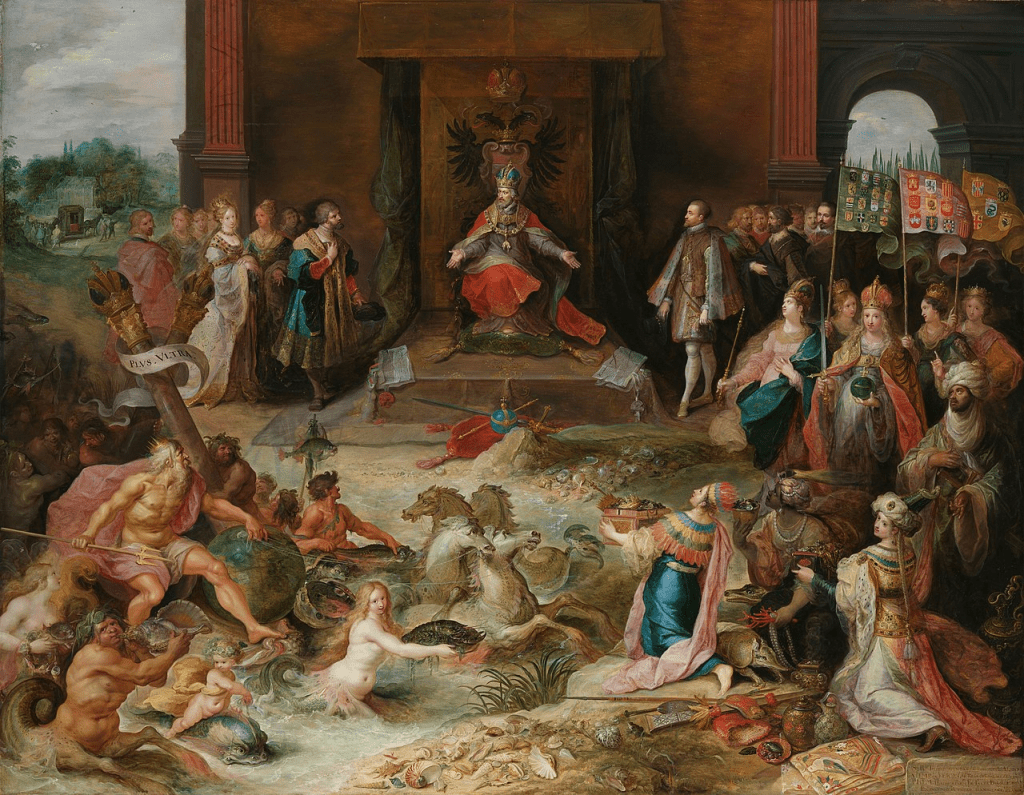
The ‘nation-state’ itself is, of course, a somewhat recent phenomenon. While it is a little trite to date them specifically to Westphalia in 1648, it is certainly true that a century earlier at the Peace of Augsburg, the connection between rulers and the ruled based on ethno-cultural identity was barely existent. The splendid Charles V, in his twilight in 1555, was the legitimate ruler of inheritances including Spain and the New World, Austria and the Holy Roman Empire, and Burgundy. Nobody on the streets of Vienna, Antwerp or Madrid complained about his ethnicity – even if they might complain about misrule. This detachment between where a ruler came from and his authority only changed with the advent of new weapons, increasingly expensive wars, and the compensation offered by rulers to their subjects for ever-higher taxes to fund the military. ‘Nationality’ was a part payment for the debt being incurred by princes as they required greater blood and treasure – “we need more from you, but you’re now fighting for your own people!”.

Allegory on the abdication of Emperor Charles V in Brussels

So nation-states, in other words, with their hard borders and inherent desire for ethnic, cultural, religious and linguistic cohesion, were a creation of European diplomacy just a few hundred years ago. And it served them fine, even as the rest of the world tended still towards the more nuanced and subtle lines of empire – today a byword for violence but in actual fact a creator of peace for most people. In simple terms, for instance, it made perfect sense for Tibet to exist within the Chinese imperial sphere; but made very little sense for it to be incorporated into a new Chinese nation-state. Likewise the Northwest Territories to the Raj. Most of all, in Jerusalem the centuries of occasionally tense but balanced coexistence between Arab, Jew and Christian was brought to an end with the creation of the Israeli state in 1947.

All three of these examples – and plenty of others besides – would have benefited from revolutionaries who looked past the (even then already dated) concept of European nation-statehood. In each case a forward-looking, more federalised concept of governance could easily have been introduced. In Europe itself, political leadership was looking at a post-national world which would lead eventually to the European Union. So why was none of this progressiveness around in Israel, India or China?

First is pure laziness. A vast number of unfounded charges are laid at the feet of the British Empire (which left the majority of its people better off than before), but the one criticism which sticks is the undignified rush to decolonisation, and the unintellectual approach used for it. Britain of course, as demonstrated with the EU, is in any case the wrong source of inspiration for ‘post-nationalism’, but at the time the navel-gazing was due to self-obsession. The credit for all the good that Empire brought, was more than a little diminished by the inglorious process of its end.

But the bigger issue was the lack of imagination from the heroes seeking to create new countries of China, India and Israel. Mao and Zhou, Gandhi and Nehru, Weizmann and Ben-Gurion were all leaders steeped in the orthodoxy of western historical teaching, and could conceptualise of nothing else other than the national structure of western powers (despite, ironically, the fact that those same imperial powers tended not to apply statehood in the empire, resulting in a measure of peace). When Churchill called Gandhi “a seditious Middle Temple lawyer, now posing as a fakir… striding half-naked up the steps of the Viceregal Palace” it was as much a comment about his cultural background as it was about his privilege. Gandhi suffered, as they all did, from a sort of Stockholm syndrome where because Europe comprised all nation-states, so should their newly independent post-imperial entities.

Not all such Westphalian myopia ended in disaster. A few successful examples included Lee Kwan-Yew’s establishment of Singapore, or the stability achieved for long periods in Thailand or Japan. But in general, the larger conflicts today still exist because someone, somewhere, could not get their minds around the temporary and cyclical nature of national constructs, instead pursuing hard-bordered strategies that had to end in bloodshed. They were not helped by their former masters, to be sure; but ultimately it is difficult for these founding fathers, all of whom played up their own supposed knowledge of history, not to take the majority of the blame.

The crises in Palestine and elsewhere, such as they are, are the fault of aspirant statesmen who could not think outside the box. None of them had a proper historical grounding, and generations since are paying for it. This insolubility deserves ennui, not obsession.

25 years on, who really won the battle over Rolls Royce and Bentley?

Best of German carmaking

Just over 25 years ago, an intricate set of corporate activities led to the former Rolls Royce car business, which included Bentley, to be owned by German acquirers. When all shook out, Volkswagen acquired the operations at Crewe and the Bentley brand, while BMW got the rights to create a new concept using the name “Rolls Royce”.

First, we should be clear that Rolls Royce since 2003, successful though it has been, is a ‘phantom’ [sic] marque. Rather like Mercedes’ attempt with Maybach, it has nothing to do with the Rolls Royce of old but rather is the upscale concept that BMW wanted to create to fill a hole in its offering.

Secondly, it is worth noting that in the real economy, rather differently to much of the digital economy of today, real assets and people are worth money. What VW acquired – and wanted – was the factory, the engineers and designers, the back catalogue and experience – of the Rolls Royce entity. That was, rightly, considered to be worth more than just the brand around the Rolls Royce. In dilettante reporting of the time, it appeared to be some major sleight of hand that BMW emerged with the brand name after VW had handed over £430m for the business. But for observers beyond the bankers and bloggers, VW were perceived to have gotten their money’s worth – and more.

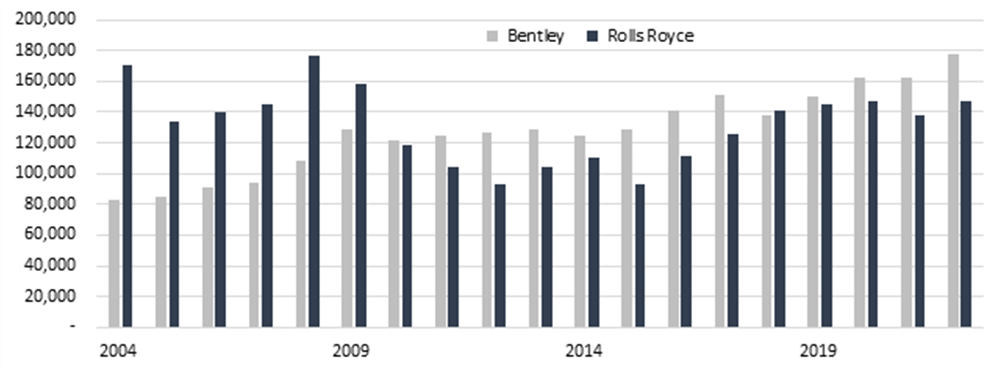
So who has done better since? Well arguably this was a win-win where both carmakers did well with what they took on. While in absolute terms, Bentley has gone on to sell three times the number of vehicles Rolls Royce has (some 200,000 since acquisition, compared to about 65,000 RRs), BMW sell their cars at more than the price of a Bentley.

Total numbers of vehicles sold per year

Source: company accounts

The boring petrol-head bit

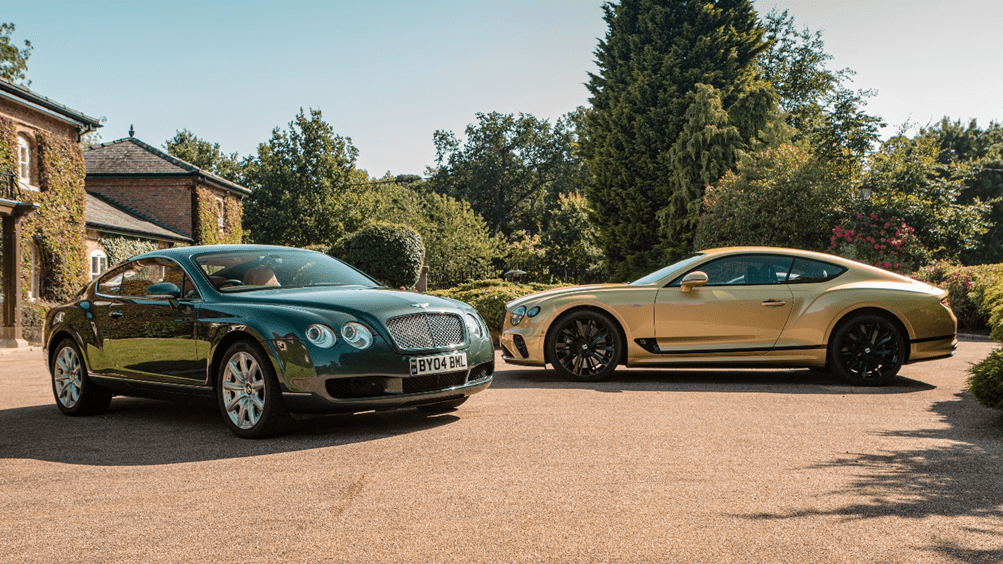
The two brands have pursued rather different strategies given who their owners were. VW, while it already had Audi in the stable (but well before it owned Porsche) wanted Bentley to provide a sporting edge which could be scaled up, rather than owning a ‘limousine’ marque. It therefore pushed the new Continental GT, a model which overnight became a success for London bankers and LA rappers alike. For BMW though, the RR brand was very much about creating a classic luxury saloon (if that can really be used for RR) sitting above their already-premium 7-series.

As mentioned elsewhere, VW went about their strategy by providing the patented W12 engine, a personal project of chairman Ferdinand Piëch, used in their unsuccessful Phaeton luxury saloon adventure, to the team at Crewe. Other than this, and giving the Bentley management a general steer on wanting to see a GT, they left the British business to get on with it – with excellent results. With the arrival of Porsche into the mix a decade later in 2012 though, VW finally started getting serious about the saloon segment, with the launch of the Flying Spur and the Mulsanne. Later again it was coming of the Bentayga, the implausible and slightly absurd Bentley SUV, which has sustained sales in recent years.

BMW went a different direction since they were starting with a clean slate. Working outside of the business over the first five years until 2003, designer and Munich-lifer Marek Djordjevic came up with the Phantom model that would kick-start German ownership of the brand. Sales were boosted again with the launch of the Ghost in 2010, the more affordable line of saloons, but in recent years it is the even more implausible and even more absurd Rolls Royce SUV, the Cullinan, which has been the catalyst – comprising more than 50% of sales since its launch and reaching almost 60% in some years. While Bentley has also had success with the SUV, it has never formed as large a part of its portfolio.

In other words, since 2003 Bentley has really lived off the Continental GT offering, reflecting its racing heritage, while Rolls Royce remained a limousine maker who have evolved into SUVs.

The important bit

Rolls Royce, anecdotally, has always been able to price a like-for-like car at a 30%-50% premium to Bentley since they were each taken over. A Wraith costs more than a Continental GT for instance, and the Ghost costs more than a Flying Spur. However taken as a whole, since introducing the Ghost in 2010 BMW has ended up with a portfolio of cheaper price points on average than VW, as total revenue per vehicle shows:

How this has translated into hard profits for their owners is more complicated. The fact is that neither of these businesses have delivered huge amounts of outright profit. Bentley managed to record a bottom line of £684m in 2022, a record, but since 2003 has dipped in and out of profitability overall. RR has managed to record a small and consistent profit over the same period, culminating in a £97m bottom line in 2022. On an adjusted, pre-R&D basis, Bentley has recorded a 21% profit margin over the last decade, compared with 8% for Rolls Royce. In the context of VW’s and BMW’s overall earnings of €15.8bn and €18.6bn respectively, these are drops in the ocean. Bentley accounts for 4.4% of VW’s earnings; RR just 0.5% of BMW’s.

Moreover, the Rolls Royce profit is overstated since BMW does not push R&D costs into the Goodwood accounts. In fact, it is likely still not profitable after two decades of operation. Bentley, due to its Crewe location being self-sufficient, has spent on average £322m on R&D per year over the last decade, leading to several years in the red. One can assume either that Rolls Royce really is just using BMW 7-series intellectual property, or it is spending similar amounts which would imply substantial ongoing losses, of at least -£100m per year as an educated guess. For what it’s worth, Bentley probably wins the financial battle comfortably.

Of course, both are growing, and as noted previously have been growing faster than their owners as a whole, at high single digit CAGR for revenues and even higher profit growth. However both are yet to fully face the challenges of electrification, though BMW are arguably ahead of VW in technology for that (Volvo / Geely, via its Polestar brand, as a full high end EV performance car which serves as a template for what these two venerable names might look to).

Conclusion

Ultimately, the consensus seems to be that both sides got what they wanted out of these brands when they battled to acquire it in 1998. VW got a sporty brand that could scale, which it has done; BMW got a limousine brand which was not designed to be scalable but to really create a layer above its premium positioning. VW wanted the hard assets of the former business including the factory and staff, given the failure of Phaeton; BMW had most of its platform already available for use and could staff up its new Goodwood facility internally. That explained the difference in pricing – BMW spent £50m on the brand and then some £100m on building the new factory, compared with the £430m VW spent buying a going concern. Bentley is meaningfully profitable though, whereas Rolls Royce has yet to contribute financially.

What neither side anticipated then, but both reacted to, was the rise of the SUV, which perhaps suited the saloon platform better than a sport GT one. Each side has done well but RR has really taken off on its SUV offering; the EV challenge will be next. At the end of the day though, the real benefits will have to be chalked up to ‘intangibles’ including prestige for the owner and, one assumes, spillover benefits from any R&D linked to these luxury marques. It is probably really us, the consumer, who has benefited from these two auto giants deciding to maintain what are basically hobby horses; if the Germans were not so vain, we probably would not have the cars we enjoy today ….

Appendix

How acquirers of car brands – even Chinese ones – can succeed

Cars have had a long innings as possibly the most globalised consumer product around is. By which I mean, they have broadly been the product category about which consumers see supply as a single world-wide market: whether you live in Belgium, Brazil or Brunei, you would still be mostly buying cars from the same top ten or so global producers for the last decades. If you are rich, you would probably be looking at the German makers, and latterly Lexus. If you are middle class you might be settling for other Japanese or European brands. If you were stupid you might buy American – but then, not even Americans do much of that.

Another way of looking at it is that cars have had the longest ‘globalisation window’ of almost any product category. As a country develops, it initially prefers foreign brands and the qualities they bring. But when a country really develops, consumption starts to re-indigenise. For instance, while cars and, say, food products both tend to globalise early, people return to their own taste in food quite soon after they become middle class (partly reflecting the lower barriers to (re-)entry). The speed with which McDonald’s or Yum localise compared to Volkswagen is telling.

In part this is because a carmaking industry is actually difficult to establish: Taiwan, for instance, despite having a steel sector, has never managed to create cars; Korea did manage to, but only after throwing the entire weight of its economic development behind that push; Malaysia threw its weight behind the effort, too, but with mixed results. People often refer to the building of aircraft carriers, or a space programme, as the symbol of a country’s total integrated industrial capability, but on a much more mundane level, so are cars.

All this combines to shape the global landscape in automotive OEMs, which have consequently undertaken enormous amounts of M&A over the years – almost all of which have been unsuccessful. Daimler’s ‘merger of equals’ with Chrysler in 1998 went so poorly that it is subject of business school case studies; while the ‘alliance’ between Renault and Nissan – undertaken a year later and heralded as a counterpoint to that merger – itself became mired in problems. Ford made numerous acquisitions of other brands over the years including Jaguar (1989), Volvo (1999) and Land Rover (2000), before selling all of them at a loss. Aston Martin was an honourable exception which proves the rule. GM did even worse that Ford – both Saab and Daewoo more or less shut down.

So successful automotive acquisitions are worth considering, and when one of those is a rare example of successful Chinese overseas industrial investment, even more so. Below are a few examples of ‘takeovers’ of well-known car brands in recent years, and their performance afterwards.

Vehicle sales CAGR since acquisition

Note: parenthesis indicates year of effective acquisition; Rolls Royce and Aston Martin not strictly ‘acquired’, for different reasons

There are a lot of details which I will not go into here, for instance the story behind Rolls Royce and BMW (the subject of another post), suffice to say that quite a few of these marques have had success over a long period of this century. To put this in context, over the same approximate period as above, the main carmakers have seen growth ranging from +4% (the Germans) to -1% (the Americans). So to understand why these acquisitions have helped practically, I will focus unashamedly on the two cars I personally own: Bentley and Volvo.

The history of Bentley and Rolls Royce is again a post for elsewhere, but Volkswagen essentially bought a faded business selling just 400 cars in 1998. For five years they dwelt on the business and how to get the best from leveraging VW’s broader platform, and in 2003 they completely reinvented the brand. Handing over the patented W12 engine – a slightly eccentric and personal project of chairman Ferdinand Piëch – the new owners steered Bentley back to their sporting roots and create the new Continental GT. The car took off, shooting sales instantly to over the 5,000 unit mark where it has remained and grown. Possibly no car better signifies reinvention than this one and VW undoubtedly gave Bentley a new lease of life.

A few years later in 2010, Chinese carmaker Geely shocked the motor world by buying Volvo, then owned by Ford. Driven by another chairman, Li Shufu, this was a test case for Chinese overseas acquisitions in an age where it was slightly less controversial. Observers expected either a total takeover or completely detachment, but as with VW and Bentley, Geely took a nuanced middle way of gentle guidance and leverage of the broader platform. Again, the new owner mulled for five years or so before pushing the redesign of the XC90 SUV in 2015, which saw Volvo’s sleepy sales take off; in 2018 it trumped this with a new version of the XC60 and Volvo’s position as one of the most popular premium SUV brands was cemented. Volvo grew unit sales by 10% CAGR between 2014-2019 prior to Covid, the vast majority of them these two models.

Both these examples show that automotive M&A can work, when there are clear alignments: first, the buyer needs to have a clear idea of what exactly they are intending to do with the new brand; secondly, they should not rush to impose changes, but take time to understand the asset; and lastly, the buyer needs underlying platform benefits to add. The case of Tata, whose control of JLR has been more mixed, is a case in point: they have not really added much to either Jaguar or Land Rover, and while the latter benefited from the global demand for luxury SUVs, Jaguar has been in stasis. Volvo, on the other hand, will be receiving the full support of Chinese EV technology, future proofing the brand yet further.

My final point reflects an earlier post I made about the quality of FID. For the UK and Sweden, these two acquisitions are exactly as hoped: inbound investment and employment but importantly, technology and IP continuing to grow at home. Bentley and Volvo remain unmistakably British and Swedish endeavours to be proud of, regardless of their owners. The same cannot be said for the low-quality investment that MPs so desperately fuss over, such as Nissan’s ‘flagship’ EV investment into Sunderland. Here, the IP is not British, and neither will the skills be; Britain’s sole role in this is to be cheaper and less regulated than its neighbours – not a desirable or sustainable model. While the volumes coming out of Crewe and Goodwood plants are much fewer, the long-term value-add to the UK is much, much greater.

Is the opportunity in the Middle East all it’s cracked up to be?

A truly adventurous expat

With several of my friends having moved, or considering moving, to the Middle East, I wanted to take a moment to consider exactly what the attractions of such a move could be for erudite, sophisticated expats (as opposed to estate agents, headhunters and so on from the Home Counties).

The Middle East is not one place, of course, so I will stick to looking at the two or three locations which are emerging more regularly in conversation: the UAE and Saudi Arabia (hereafter referred to as “the Kingdom” in deference to the Kool-aid drinkers out there – you know who you are). Specifically, it is jobs in Dubai, Abu Dhabi and now Riyadh which appear more frequently, creating the wave of excitement about acronyms which we have become used to: ADQ, ICD, ADIA, PIF and so on.

It strikes me that as an expat looking to take up a second innings in the Gulf after years in, say, East Asia, there are three variants of what might make the story “the real thing”. First, obviously, as a source of investment funds for expats to service; secondly as a final market for commerce and consumption; and lastly, unashamedly as a venue for globalists to pass their time and enjoy ill-gotten gains. I will assess each of these in turn.

As a source of investment funds

This storyline seems pretty unassailable. Sovereign wealth is not the only form of investment money, but they are a useful proxy for the overall picture even if doing so favours the Middle East (China and other major economies have much more substantial capital in the hands of corporates). Gulf SWFs have been accumulating for some time – as an oil and gas banker, even the 2000s were an era to look for their capital. Then along came PIF which blew them all out of the water.

Sovereign wealth AUM by country (US$bn)

Source: SWF Academy / LBS; Note: ‘Other Gulf’ includes Kuwait, Qatar, Oman and Bahrain

However, it is important to consider that the attraction of this money is not only that there is a lot of it, but that the holders must be rather stupid. For all the noise, the scale of SWF money from the Gulf is comparable with Asia – Singapore alone has funds equivalent to the Kingdom, whilst China dwarfs all of them. So why are these same expats not clamouring to work at Temasek or the CIC?

As racist as it sounds, it is because expats want to believe the Middle East is still ‘dumb money’ compared to Asia. And while a case could be made for this – a significant amount of the Gulf money remains undeployed and one assumes they are not yet as sophisticated – one must surely be conscious of the closing window. If it took 20 years for Asian money to wise up, there is no reason to believe Middle East will be slower; indeed it may well be faster.

Additionally, to rely on this argument, we are really saying that expats do not know if they like actually living in these places, but they must because the Gulf has the money and we do not. The expectation is that activity will be largely outbound, allowing expats to service their hosts but spend as much time as possible elsewhere. Geneva without the scenery … an exciting start.

As a commercial market

This is a more productive area to discuss and indeed to hope for. Expats in Asia will be painfully aware that ultimately, the self-sustainability of an economic opportunity relies on underlying indigenous consumption and therefore on population scale.

The markets we are talking about in the Middle East are not enormous. The Kingdom spices things up with its arrival of course, adding 35m people to the cluster of small city states around it, and this should not be dismissed; but it is hardly the stuff of global engine rooms. On a simple basis, unless the ‘Middle East’ can come to encompass two or more of Egypt (113m people), Iran (89m) or Turkey (85m), the scale of the opportunity presents an insurmountable problem for those seeking to make long-term money.

But there are nuances. For instance, what exactly is the region’s ’Middle Class’ and how does it compare? For this quick assessment, I tend to use the Credit Suisse data on wealth distribution as a basis, with the US$10,000 band representing the ‘emerging middle class’ while the US$100,000 speaks to those who are truly middle class. From a consumption perspective, this equates respectively to those who can be ‘mass modern’ consumers (shopping in, for instance, air conditioned modern retail outlets), and those who are ‘mass premium’ consumers (who might, for instance, consider buying a Lexus or holidaying abroad). This is a shorthand but useful nonetheless.

On the positive side, small as the population is, the spending power in the UAE and the Kingdom is probably outsized compared to markets we know and love in Asia. While the adult population of the two countries totals the same as Malaysia, the numbers of upper middle classes are significantly higher. In particular, richer consumers abound here compared to similar sized Asian countries, hinting at a strong market for luxury goods.

On the other hand, while the population has been growing, the prospects of that growth face some headwinds. Unsurprisingly, the Gulf states tend to suffer significant inequality, which is never a strong basis for future development. As has been discussed previously, there is a significant correlation between low starting inequality and the pace of nominal GDP growth, with the likes of China and Vietnam outperforming Indonesia and the Philippines as a result. The Emirates and the Kingdom fare poorly on this which may indicate a lower ceiling of sustained progress.

Combining these together, I think what we are looking at is an exciting enough market, about the size of Singapore + Malaysia with a chance of ultimately becoming Thailand. Let us be clear: if the Kingdom can achieve the level of Thailand, with its relatively strong manufacturing and consumption, it will have done very well indeed. It will not make huge numbers of foreigners hugely rich, but will support a few of them for a few years; and if you are geared towards the luxury end of the market, the region may well reward you handsomely.

As the new globalist hub

Now we come to the most nebulous and most hubristic idea: that following the ‘decline’ of Asia, and therefore the lessening of the attractions of Hong Kong and Singapore, the likes of Dubai can take up the mantle of being the hub of the ‘citizens of the world’ (aka ‘citizens of nowhere’).

If we look at the two previous sections, we have covered some, but not all, of this ground. On the one hand, the sheer volume of investment flow (mostly outbound) will for a few years require international talent until, like developed Asia, they no longer need it. On the other hand, even the most optimistic view of domestic demand shows a ceiling in both amount of foreign employees and for how long they are needed. But what if the Gulf somehow “corners the market” for international expats, becoming the place for the globalised to live as this world ever shrinks into localisation?

First off, we should be clear that following the examples of the Asian city-states, there can really only be a couple of these if they succeed at all. The fundamentals argue in favour of the UAE over the Kingdom at this point, since Dubai is already established and given the seeming hardships still true of Saudi which, regardless of the pace of liberalisation, will still see expats want to party elsewhere. For the record, given the religious nature of society, I do not see Riyadh being able to be as ‘fun’ as Beijing was c 2005-2015 – so that already robs it of one possible selling point.

So assuming that we are talking about Dubai, possibly assisted by Abu Dhabi, the question is whether the allure of regional investment flows can outweigh the domestic demand elsewhere, and if so, by how much to allow expats to feel like the little kings they want to be? It assumes a substantial ongoing decline in Asia, for a start: if even one of Singapore or Hong Kong remain alive, they will immediately draw critical mass away from the Emirates. The UAE strategy is rather Google-esque, since it sort of requires going for broke. You either win everything or you end up not breaking out of the limited regional play.

Could expats from London or New York live in the Emirates and traverse the globe from their new-build beach homes? Certainly there are a few geographical benefits in terms of time zones (albeit not for the US market, a true arbiter). The place is spanking new and Filipina helpers are a dime a dozen. But unlike in Hong Kong, and slightly more like Singapore, expats would have to spend much more of their time on flights since others would be less naturally attracted to travel through. When you factor in that the ‘big neighbour’ is much rougher than China or Indonesia were for the others, it paints a picture of life being a touch less fun.

As a final note, I have not excluded consideration of other jurisdictions, because none of them pass muster. Kuwait is totally off the agenda due to its domestic social policies. Qatar remains too much of a geopolitical risk locally for expats to throw their lot in with compared to the others. Bahrain is the other ‘sanctuary’ city but has surely lost the race to get started vis-a-vis the Emirates. Further afield, Oman and Jordan are on the fringes of the region.

The sad thing is that all of these venues are new-builds: what a cultured foreigner would really want is to live in historical Baghdad, Damascus or Tehran, but these are all off the market. Had any of these cities been the take-off point, the story could be dramatically different.

A baseless prediction

Where does this all leave us? As an Asia expat for over 15 years now, based in Singapore, Hong Kong and Beijing, I will indulge myself on making an outside-in forecast about how attractive the Middle East really is for myself and my friends.

First, I cannot refute that a near-term bubble of at least 3-5 years is still in the offing. Dubai has already had a decent innings but I do expect real estate investment for instance to be well-rewarded. For a few years, too, I expect some decent employment opportunities to emerge for first movers, the equivalent of FILTH during the 1980s and 1990s. Real skills will not be much required in the very first wave. The Gulf will also attract – possibly permanently – currently homeless parts of the global new economy such as crypto.

However I do expect this to change quite quickly, and more so than in Asia. Dubai does not have the colonial and post-colonial legacies of Hong Kong or Singapore commercially, socially, infrastructurally or legally. This means a lesser and shorter rent seeking phase for white people. It also exerts no permanent hold on its larger neighbours the way Hong Kong (for China) and Singapore (arguably Malaysia and Indonesia) do, which means the opportunity will start to ‘leak’ out to the local markets more quickly than they did in Asia. The Emirates will not have a century to be bedded in as the place to do business in Saudi the way Hong Kong did for China. Development, if successful, will more resemble how Vietnam has exploded so indigenously, barely giving regional expats a window to be relevant.

More than anything though, my feeling is that the Middle East just cannot become ‘pleasant’ enough to be sustainable for so many expats. The moment they are not needed they will leave, whereas Hong Kong (and Singapore?) continue to exert an influence over expats even as its best days appear to be behind it. It has mountains; it has seasons; it has a western mentality partially instilled into local people. I don’t doubt that Dubai has been fun, and Abu Dhabi and Riyadh may yet be for a few years; but I don’t believe it will feel as expansive as, say, living in Shanghai has been. And some of that has to be the size and depth of the local civilisation. The globalists will definitely lose interest after a while.

For out-of-work bankers, this will not deter the enthusiasm to look West. Some will have perfectly decent second careers there – albeit probably for a shorter period and likely involving a more frontier lifestyle than they are used to. Good luck to them – expats are nothing if not opportunistic. But to those who believe the Middle East represents a generational opportunity to take up the mantle of a growth engine, I think they will need to moderate their hopes. We will see how right this may be within 5 years.