Given the dominance of Real Madrid and Barcelona on La Liga, and the importance of men like Florentino Perez in European football discourse, the outside observer would be forgiven for overlooking the role of the governing bodies. After all, surely the biggest clubs – which vastly overshadow their domestic peers in a way that does not happen in the Premier League – call the shots?
But surprisingly, the Spanish football federation has not only frequently come out on top against their biggest club members, but has also been a historical pioneer in football governance in a way which has set the agenda across the continent.
Transfer windows
In 1995, La Liga instituted the first modern restrictions on player trading, allowing changes of club only during a long summer break and a shorter winter slot. Strange to think, that across Europe until then, all major leagues allowed unlimited transfers until each of their deadline days – end of January for Italy, February in Germany and France and absurdly the 31 March in England, mere weeks before the season ended. At the time, transfer windows were designed to protect smaller clubs by not allowing Real or Barca to take their rivals’ best players mid-campaign, and Spain even prevented mid-season moves if a player had already played 5 matches for their club. FIFA then went on to adopt this system wholesale, bringing cross-border alignment to all leagues by 2002 to the system we know today.

Buyout clauses
By the time of the Bosman ruling in 1995, Spain already had a system of buyout clauses described by World Soccer magazine, amongst others, as “positively futuristic”. In fact though, Spain had laid the groundwork for this a decade earlier when they actually had their own version of Bosman, leading to the Royal Decree 1006 which freed players to break contracts with their clubs. Clubs in turn responded by introducing the buyout clause – the difference with today being that the buying club actually gave the transfer value to the players themselves, who in turn paid their employer out and became a free agent. The most (in)famous example of this in action was Figo’s transfer from Barcelona to Real Madrid in 2000 for an astronomical €61m. Since that time, clubs around Europe began to normalise such clauses such that they are now commonplace.
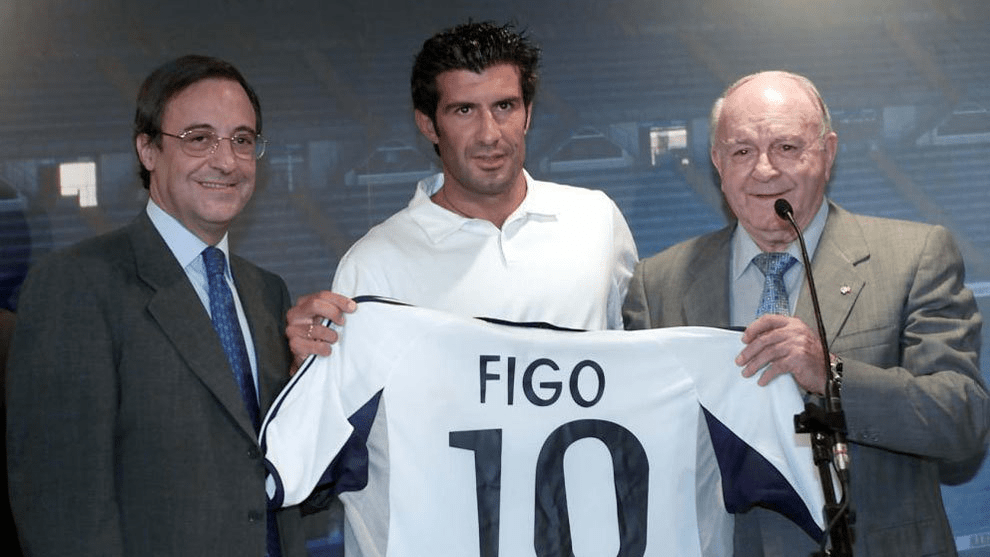
Image rights
In response to a change in the taxation rules in 1996, Spanish clubs began to split player compensation into two parts: salary and the use of image rights. This was revolutionary in two ways: first, it helped create a new world of tax avoidance which spread to most other leagues; secondly, it focused marketing attention on the image rights portion of football. Marketing agencies began to specialise in this segment which in turn changed the way the advertising industry used football. Image rights became a major political issue under Florentino Perez’s first Galacticos stint, but by then the Premier League and others had already taken up the baton. The reductio ad absurdum of this arrived through incidents such as Paulo Dybala’s transfer to England falling through in 2019 due to his image rights being sold and owned to third parties. At a club level, Barcelona’s rescue package in 2023, where they sold 25% of their future TV rights, is in some ways a continuation of this.
Salary caps
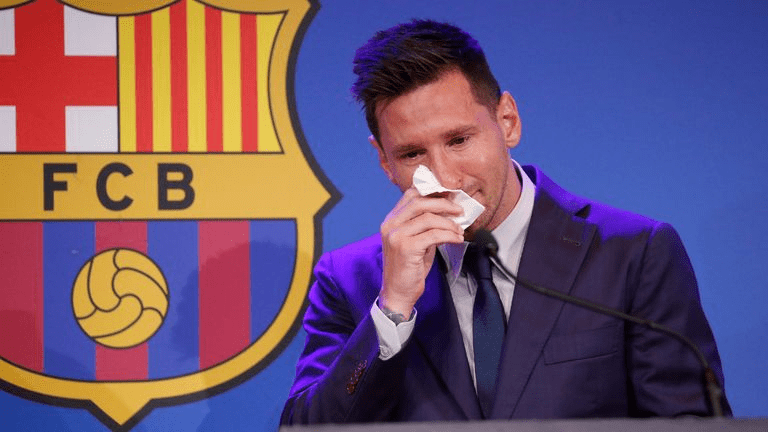
Before the coming of FFP in Europe, and then PSR and now SCR in England, Spain already developed a (seemingly quite heavy-handed) scheme for cost controls. Taking inspiration from US sports franchising, La Liga implemented a total squad salary cap from 2013 onwards, after several years where smaller clubs had come a cropper in the 2000s trying to chase down Real Madrid’s Galactico model. Many of them, moreover, were incurring ever greater debts to still buy players, while owing money on transfers and even wages to the current squad. In order to protect socio-owned clubs from themselves, La Liga actively calculated budgets and prevented new signings from being registered, a personal project from autocratic president Javier Tebas. The most high profile outcome of this was Barcelona’s inability to re-sign Lionel Messi – who was actually still at the club – on to a new contract in the summer of 2021 and hence pushing him out to PSG. Certainly not a case of the big clubs holding the system to ransom.
Neutral venue matches
To be fair, in this area the Premier League did technically start earlier through its “39th Week” proposal in 2008, where the idea was to create an entire new round of fixtures to be played in various venues worldwide. However they backed down on it fairly quickly, where ten years later in 2018 Tebas (yes, it be he again) not only signed a new sports rights deal with Relevant Sports but went as far as to organise the Girona vs Barcelona fixture in Miami, scheduled for January 2019. While both clubs agreed to it, pressure from RFEF, UEFA and FIFA caused Tebas to back down – only for Relevant Sports to bring the lawsuits which forced UEFA itself to finally capitulate in 2025. Matches abroad are now permissible, all thanks to Spain.
Not only that, but Spain has been proactive in wanting to host others. The best example was Spain jumping at the chance to own the 2018 Libertadores Cup replay in Madrid between Boca Juniors and River Plate, after violence prevented the original fixture. However even further back, Spain offered to host everyone from Yugoslavian refugees Red Star Belgrade during their civil war, through to a number of Champions League matches during the height of Covid (not the final mini tournament, but several quarter-finals when logistics were much less sure).
Creation of a breakaway big money league
The most historical example of Spanish innovation is the creation of a more commercially orientated league setup, in anticpation of forthcoming revenues such as television rights. Spanish clubs broke away from the RFEF to form La Liga all the way back in 1984, a decade earlier than the Premier League. While in some respects, this act was as reminiscent of the Football League creation in 1888 as anything else, the similarities with more recent examples is the focus on commercialisation (the FA / Football League split was a contest over professionalisation vs amateurism as much as anything). La Liga was followed not only by the Premier League in 1992, but also the Bundesliga (2001), Serie A (2010) and the Ligue 1 (2022).
A side spur of this is the whole Superleague question. La Liga and the RFEF of course vociferously fought the idea of the Superleague, but ironically the culture of La Liga is what first set Real Madrid and Barcelona off on that direction alongside Juventus. And strange though it sounds to English or German ears, the idea of the Superleague is nowhere near as unpopular in Spain as it has been elsewhere, because the long-term culture to try new things has been cultivated over decades.
*******
There are numerous reasons why Spain has always been so innovative in football governance. Some of this is deeplying in the legal and corporate culture of the country, including the focus on labour law post the Franco regime and the relatively litigious nature of the economy. Some of it has been driven by individuals such as Tebas or Perez. Above all though, Spanish football has always kept a weary eye on its place in the competitive landscape, particularly with regards Italy in the 1990s and then England since the 2000s. The authorites recognise the marketing strength of the big clubs, but also know that the whole product has to be sustainable in order to leverage that reach.
UEFA has headed off the Superleague for now, but the instincts which that proposal embodied – the innovative, the commercial, the litigious – had its roots mainly in Spain. And while the Premier League leads in revenues and sponsorship deals, it seems very likely that the next wave of innovations around governance will come once again from Spain. Ex Hispania semper aliquid novi, as Pliny might have said.

